The phone in your pocket started its journey on a ship
Pick up your smartphone. The chips inside were likely made in Taiwan or South Korea. The casing was probably assembled in China. The rare earth minerals in the battery came from somewhere in Southeast Asia. Before any of those parts reached a factory, and before the finished device reached a store near you, they almost certainly passed through a single narrow strip of water between two peninsulas and an island. That strip is the Strait of Malacca. Almost everything that moves between the Indian Ocean and the Pacific passes through it.
A narrow neck between three countries
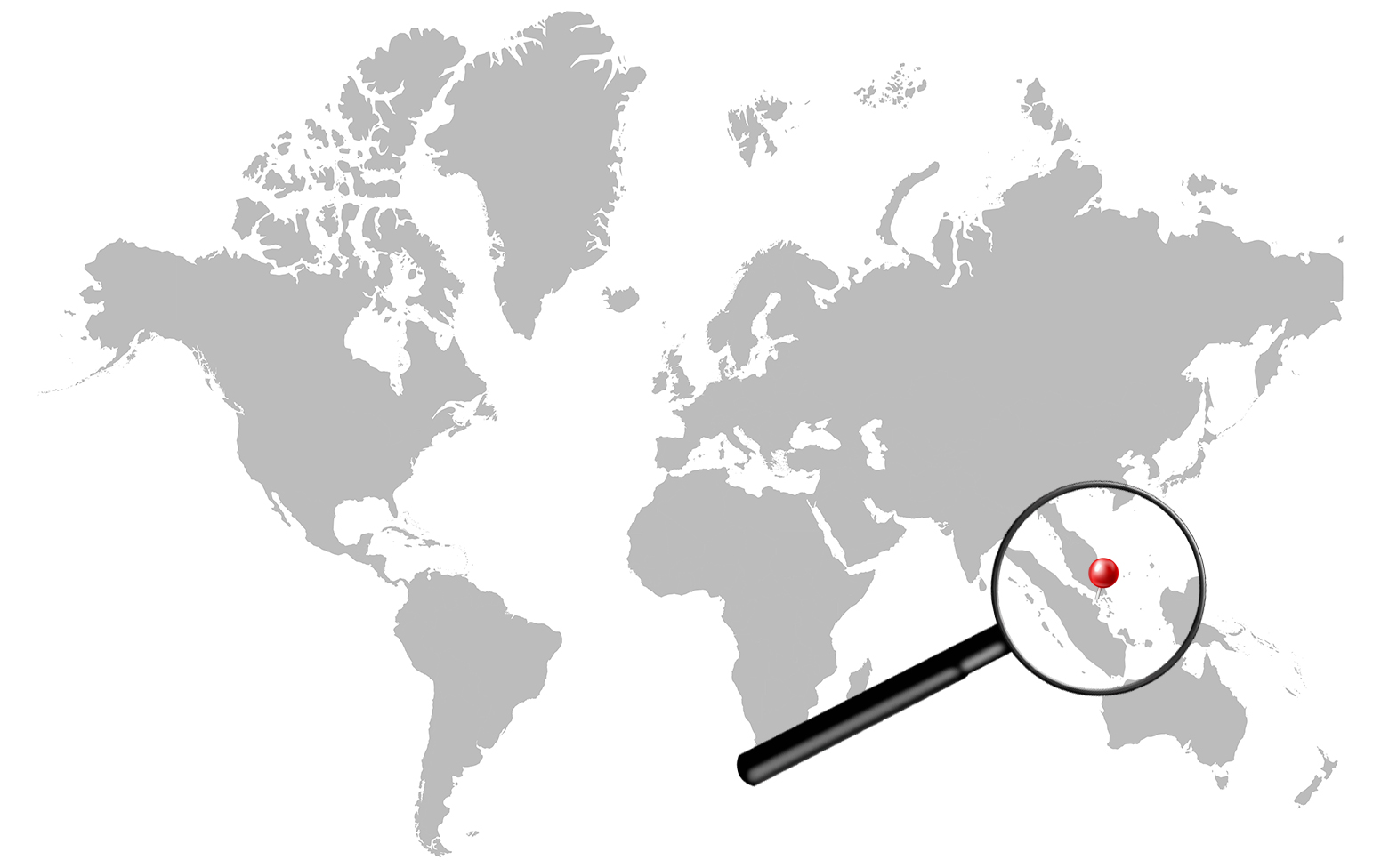
The Strait of Malacca sits between the Malay Peninsula to the north and the Indonesian island of Sumatra to the south, with Singapore at its eastern tip. At the western end it opens into the Andaman Sea and, beyond that, the Indian Ocean.
The strait runs roughly 900 kilometres from end to end, about the distance from Paris to Warsaw. But length is not the issue. Width is. The channel narrows sharply as it approaches Singapore, squeezing to just 2.8 kilometres at the Phillip Channel. Two ships travelling in opposite directions share a corridor not much wider than a large city avenue. The Singapore Strait at the eastern exit handles the heaviest concentration of traffic and is, mile for mile, the most congested section of the route.
What actually flows through
Around 94,000 ships use the strait every year, roughly one vessel every six minutes, day and night. Together they carry about a third of all global trade by value, estimated at $3.5 trillion annually.
Oil dominates. The International – U.S. Energy Information Administration (EIA) records roughly 23.2 million barrels of oil per day moving through the strait (2025), more than any other chokepoint on earth, including the Suez Canal or the Strait of Hormuz.
Beyond oil: bulk carriers haul iron ore and coal from Australia and Brazil to steel mills and power stations in East Asia. Container ships carry electronics, clothing, and automotive parts in both directions. Liquefied natural gas tankers, move gas from Middle Eastern and Australian producers to consumers across the region. One physical constraint governs all of them: the maximum permitted draft (the depth a vessel sits in the water) is 25 metres, which limits fully-laden supertanker access and shapes the economics of the entire route.
Who depends on it
For Asia’s largest economies, the Strait of Malacca is not simply convenient, it is structurally essential.
China channels about 80% of its oil imports through the strait, representing 60% of the country’s entire oil supply. Two-thirds of China’s total maritime trade volume moves through these waters. Japan, which imports virtually all of its oil and has no significant domestic energy production, routes around 40% of its maritime trade through Malacca. South Korea, Taiwan, and most of Southeast Asia face similar dependencies. For these nations, a disruption to the strait is not an inconvenience, it is a direct threat to industrial output, energy supply, and economic stability.
The alternatives, and why they fall short
Two other passages link the Indian Ocean to the Pacific within the Indonesian archipelago: the Lombok Strait and the Sunda Strait.
Lombok is deeper than Malacca and can handle fully-laden supertankers, which the draft limit at Malacca cannot. But using it adds one to three days of sailing time and the equivalent fuel cost on every voyage. Sunda Strait, between the islands of Java and Sumatra, is shallower and more difficult to navigate.
Neither can absorb meaningful diverted volume. If a fraction of Malacca’s 94,000 annual vessels were rerouted, Lombok and Sunda would become congested almost immediately: the ports, traffic management, and anchorage do not exist at the scale required. Malacca cannot be replaced. It can only be disrupted.
China’s Malacca Dilemma
Strategists have a name for Beijing’s exposure to this single passage: the “Malacca Dilemma.” Because so much of China’s energy and trade flows through a waterway it does not control, one that sits within Malaysian, Singaporean, and Indonesian waters, China is structurally vulnerable. A serious disruption at Malacca could, in theory, starve China’s factories and power stations without a single shot fired on Chinese soil.
This is one of the forces behind China’s Belt and Road Initiative, a vast infrastructure program spanning Asia, Africa, and Europe. Part of its logic is to build overland and alternative maritime routes that reduce Malacca dependence: pipelines across Myanmar, deep-water ports in Pakistan and Sri Lanka, rail links through Central Asia. Whether these projects genuinely reduce the exposure is debated, but the dilemma itself shapes Chinese foreign policy in measurable ways.
Piracy and security
For decades, the Strait of Malacca was one of the most dangerous shipping lanes in the world, with hundreds of attacks recorded annually in the 1990s and early 2000s. Coordinated patrols by Malaysia, Singapore, Indonesia, and Thailand, launched in the mid-2000s, reduced incidents sharply. The International Maritime Bureau (IMB) still monitors the strait and still records occasional incidents, mostly opportunistic theft from anchored vessels. The situation is far better than it once was, but it depends on sustained cooperation between the bordering states.
What traders watch
VLCC (Very Large Crude Carrier) freight rates on Middle East-to-East Asia routes move with demand and congestion through the strait. Delays at Singapore flag broader bottlenecks before they appear elsewhere. Geopolitical tensions in the South China Sea, at the strait’s eastern exit, push up marine insurance premiums and force rerouting decisions across the region.