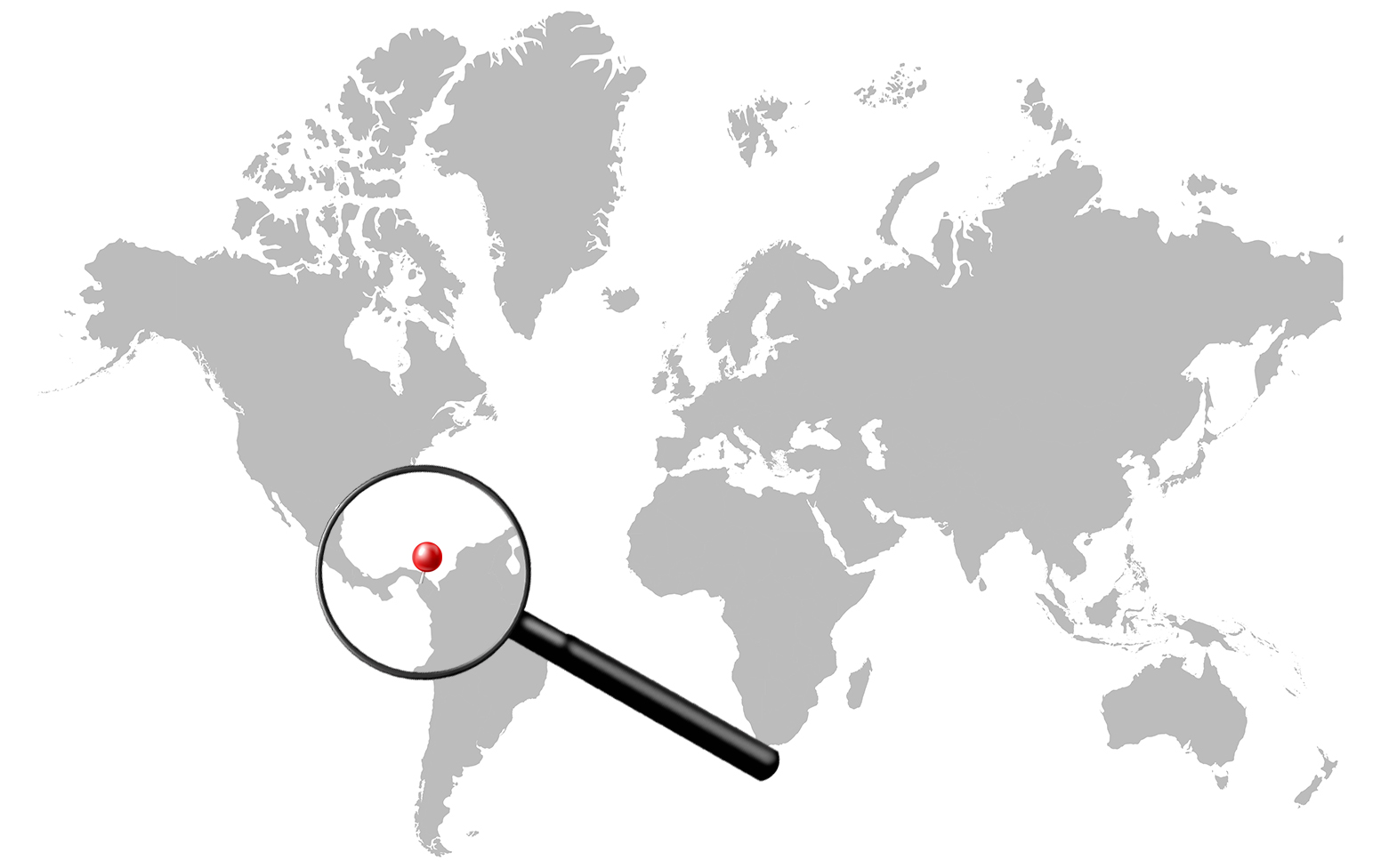
From Tropical Rainfall to Global Prices
A drought settles over a narrow strip of tropical rainforest in Central America. Within weeks, freight rates begin to climb, agricultural markets become more volatile and liquefied natural gas prices edge higher in Asia.
No war has broken out. No pipeline has ruptured. No major port has shut down.
The problem is far simpler: there is not enough rain.
At the centre of the story lies the Panama Canal, one of the world’s most important trade corridors. Here, rainfall is more than the weather statistics. It is a critical input into the smooth functioning of global commerce.
A Canal Powered by Fresh Water
When people think of a canal, they usually picture a waterway carved at sea level, linking two bodies of water. The Panama Canal works very differently.
The Panamanian isthmus rises significantly above sea level at its center, making a simple sea-level route impossible. Instead, ships are raised and lowered through a series of locks that function like giant water elevators.
As a vessel enters a lock, gates close behind it and millions of liters of freshwater flow into the chamber, lifting the ship higher. The process is repeated until the vessel reaches Gatún Lake, the vast artificial reservoir at the heart of the canal system. On the other side, the sequence is reversed, gradually lowering the ship back to ocean level.
Every transit requires vast quantities of fresh water — roughly 190 million liters. Once used, that water flows into the sea and cannot be recovered. The canal therefore depends entirely on rainfall across the watershed that feeds Gatún Lake.
Without rain, the locks cannot operate. Without the locks, the canal cannot function.
A Vital Artery of World Trade
Roughly 6% of global seaborne trade passes through the Panama Canal. Each year, around 14,000 vessels carry approximately 500 million tons of cargo through the waterway.
For the United States, its importance is even greater. Nearly 40% of the country’s container traffic moves through Panama.
Among the most strategically important cargoes is liquefied natural gas (LNG). Producers on the US Gulf Coast rely on the canal to supply markets across Asia, particularly Japan, South Korea and China. Without this route, LNG carriers would face a lengthy detour around South America.
Agricultural commodities are equally significant. Soybeans, corn and wheat harvested across the American Midwest are transported to Gulf ports before being shipped to Asia. Any disruption along this route can quickly ripple through global food markets.
Petroleum products, vehicles and containerized goods make up much of the remaining traffic, moving in both directions between the Atlantic and Pacific.
The 2023–2024 Drought: A Stress Test for the Canal
The El Niño event of 2023–2024 provided a stark reminder of how dependent the canal remains on weather conditions.
Rainfall fell well below seasonal norms, water levels in Gatún Lake dropped to historic lows, and the Panama Canal Authority was forced to restrict daily traffic.
Under normal conditions, between 36 and 38 vessels transit the canal each day. At the peak of the crisis, that number fell to around 22 to 24, representing a reduction of almost 40%.
The result was an immediate backlog. Long queues formed at both entrances to the canal, with some ships waiting weeks for a transit slot.
Shipping companies faced a costly choice: wait, pay for priority access, or find another route. Some premium reservation slots sold for more than $500,000.
For those choosing to reroute, the alternative was hardly cheap. Additional transport costs spread through supply chains and ultimately affected the prices of energy, agricultural commodities and manufactured products around the world.
A rainfall shortage in Panama ended up affecting consumers thousands of miles away.
The Long Way Around
When ships cannot use the canal, the alternatives are limited.
The most obvious route is around Cape Horn at the southern tip of South America. Depending on the voyage, this can add around ten days to the journey and requires passing through the notoriously rough Drake Passage, one of the most challenging stretches of water on the planet.
Another option is the Strait of Magellan. Conditions are often less severe, but the route remains difficult because of its narrow and winding channels.
Neither alternative can match the efficiency of the Panama Canal, which remains by far the fastest maritime link between the Atlantic and Pacific Oceans.
From Engineering Marvel to Global Gateway
The idea of linking the Atlantic and Pacific through Panama dates back to the nineteenth century. The French made the first serious attempt in the 1880s but were ultimately defeated by engineering, financial and health challenges.
The United States took over the project in 1904. A decade later, in August 1914, the canal officially opened to traffic.
It was one of the greatest engineering achievements of its age, but it came at a tremendous human cost. Tens of thousands of workers, many from the Caribbean, lost their lives through accidents and tropical diseases.
For most of the twentieth century, the canal remained under American control. Following the Torrijos-Carter Treaties of 1977, authority was gradually transferred to Panama, which assumed full control on 31 December 1999.
A major expansion completed in 2016 added the Neo-Panamax locks, allowing much larger vessels to pass through the waterway and reinforcing the canal’s significance in global trade.
Why Commodity Traders Watch the Weather in Panama
For participants in commodity markets, the Panama Canal is far more than a shipping route.
It is one of the world’s most important trade bottlenecks, and bottlenecks often provide some of the earliest signs of stress within supply chains.
Traders closely monitor transit volumes, vessel queues and reservation prices. When LNG carriers begin to accumulate outside Colón on the Caribbean side of the canal, Asian gas markets often take notice.
Agricultural traders watch for similar signals. Delays affecting US soybean shipments to China can alter trade flows, strengthen demand for Brazilian exports and influence prices across global markets.
Weather forecasts have therefore become valuable market indicators. El Niño projections are now analyzed alongside freight rates, inventories and energy data, reflecting the growing recognition that climate conditions in Panama can have consequences far beyond Central America.
The rain that falls on Panama’s tropical forests is no longer just a matter of weather. It has become a market variable with global implications.