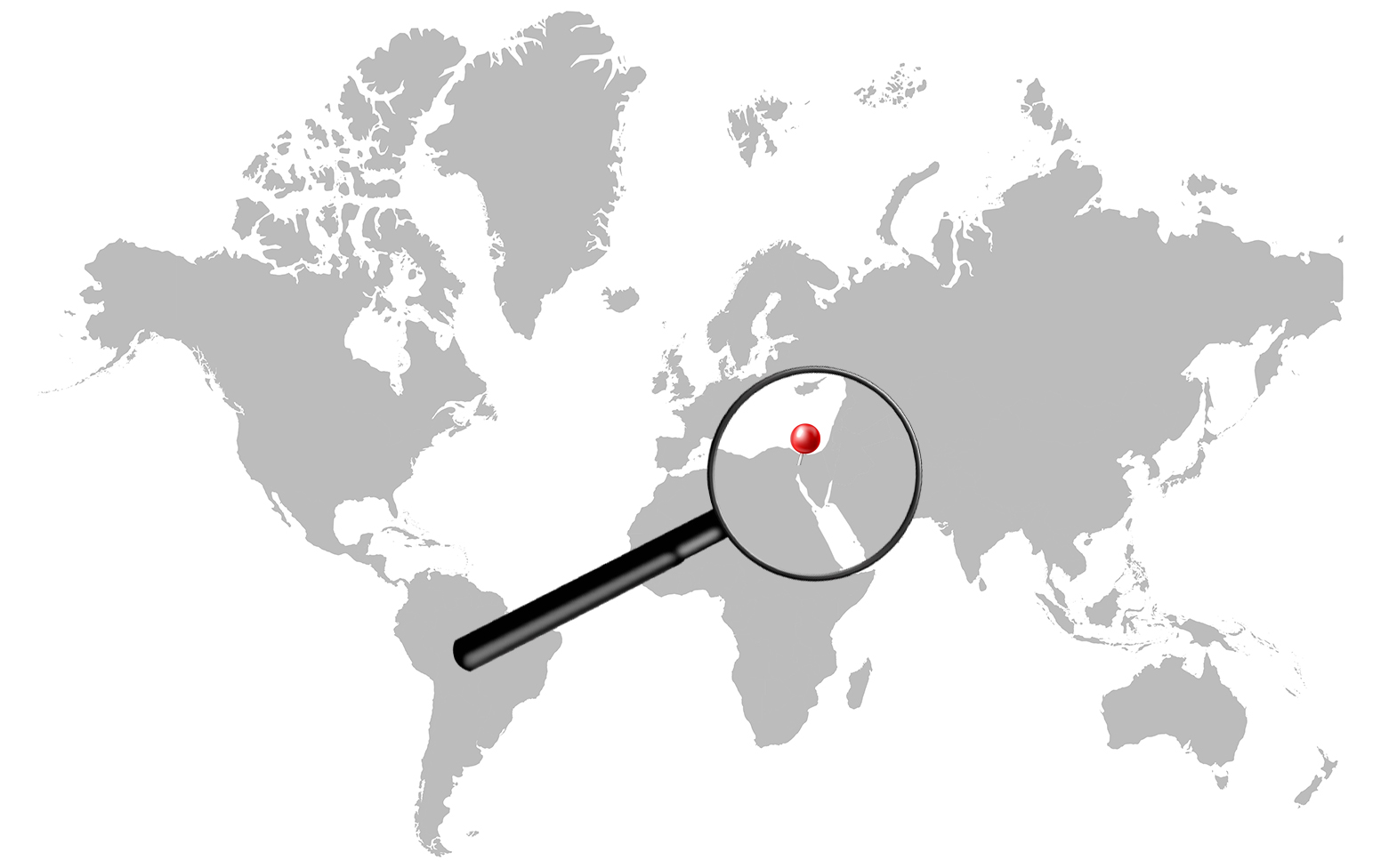
Picture the car parked outside your home, or the smartphone in your pocket. The odds are good that at some point in its life, one of its parts — a battery cell, a semiconductor, a steel component — crossed a narrow strip of water between Yemen and Africa. From there it slipped north through Egypt, emerged in the Mediterranean, and arrived in a European port weeks later. Two chokepoints. One corridor. Much of the world’s trade depends on it.
The System: a Southern Gate and a Shortcut
Think of it as a two-lock door. The first lock is the Bab-el-Mandeb Strait, a 29-kilometre gap between Yemen and Djibouti at the southern tip of the Red Sea. The second lock is the Suez Canal, a 193-kilometre channel cut through Egypt connecting the Red Sea to the Mediterranean.
Neither one works without the other. A ship sailing from Shanghai to Rotterdam must pass through Bab-el-Mandeb to enter the Red Sea, then travel its full length before entering the canal. Skip the strait and you cannot reach the canal. Close the canal and the strait becomes a dead end. Together, they form the shortest maritime link between Asia and Europe — a route so heavily used that disrupting either chokepoint sends ripples across supply chains within days.
Bab-el-Mandeb: the Gate of Tears
The name translates from Arabic as “Gate of Tears.” Sailors have called it that for centuries, and the geography explains why. At its narrowest, the strait is just 29 kilometres wide, split into two shipping lanes — one for inbound vessels, one for outbound. On one side sits Yemen, fractured by conflict. On the other, Djibouti and Eritrea, two small nations that have quietly become some of the most strategically important territory on the planet.
Under normal conditions, roughly 8 to 9 million barrels of oil per day flow through the strait, along with a steady stream of container ships, bulk carriers, and liquefied natural gas tankers. That volume represents 10 to 12 percent of all international maritime trade and roughly 20 percent of global container shipments that move through the Red Sea corridor.
It is, simply put, the only direct maritime access to the Suez Canal from the south. There is no back road. If the gate closes, ships must sail an entirely different journey.
The Suez Canal: the Shortcut that Changed History
Before 1869, a ship leaving London for Bombay had no choice but to sail south around the entire African continent — past the Cape of Good Hope, across the Indian Ocean, and north to its destination. The Suez Canal erased that journey. Opened after a decade of construction, the 193-kilometre man-made channel through Egypt shortened the Asia-Europe sea route by roughly 7,000 kilometres.
Today, around 25,000 ships per year use the canal in normal conditions, carrying between 12 and 15 percent of all global trade and close to 30 percent of global container traffic on the Asia-Europe route. The canal also carries approximately 9 million barrels of oil per day when combined with the SUMED pipeline that runs parallel to it on Egyptian soil. Revenue from the canal is a cornerstone of Egypt’s national finances.
The canal’s fragility was laid bare in March 2021, when the container ship Ever Given ran aground and blocked the waterway completely for six days. Six days. That single incident held up an estimated $9.6 billion in global trade — a figure that made clear just how little margin there is when 25,000 ships a year must squeeze through a channel with no alternative.
What Flows Through This Corridor
The range of goods passing through Bab-el-Mandeb and the Suez Canal reads like a list of modern life’s essentials.
Crude oil and refined petroleum products from the Gulf flow north toward Europe. Liquefied natural gas tankers make the same journey. Grain and agricultural commodities — wheat, rice, soybeans — move in both directions, linking producers in South Asia and the Americas to importers in North Africa and the Middle East. Consumer electronics manufactured in China and Southeast Asia travel westward in giant container ships. Cars assembled in South Korea and Japan follow the same path. European machinery and chemicals head east in return.
As UNCTAD has noted, any disruption to this corridor has direct consequences for food security, energy supplies, and the global economy — not just for large trading nations, but for smaller, import-dependent countries with few alternative sources of supply.
What Happens When It Closes
The alternative to Bab-el-Mandeb and the Suez Canal is the Cape of Good Hope, the southern tip of Africa. It works. Ships have sailed it for five centuries. But it adds roughly 11,000 nautical miles to the journey between Asia and Europe, and between 10 and 14 extra days at sea per voyage.
Those extra days are not free. Fuel costs rise. Crews must be paid longer. Insurance premiums — already elevated in high-risk zones — stack up. Charter rates climb as the same ships must cover far greater distances. UNCTAD’s 2024 maritime transport review found that longer routes raised global vessel ton-mile demand by 3 percent overall and container ship demand by 12 percent — meaning the industry needed 12 percent more capacity just to move the same amount of goods. The same report found that the Shanghai Containerized Freight Index more than doubled during sustained rerouting, and projected that sustained high freight rates could push global consumer prices up by 0.6 percent.
That cost does not stay in the shipping industry. It moves, gradually but reliably, onto supermarket shelves and factory order books.
Why Traders Watch It
Anyone who trades oil, shipping stocks, or commodity futures pays close attention to this corridor. The logic is straightforward: political instability in Yemen or the wider Horn of Africa is not just a humanitarian story — it is a freight-rate signal. When vessels begin diverting around the Cape of Good Hope in significant numbers, tanker rates spike because the same fleet must now cover more distance. Oil prices can tick upward as supply lines lengthen. Insurance premiums on Red Sea crossings rise quickly when the risk calculus shifts.
Analysts note that incidents in the strait can trigger widespread market and geopolitical reactions well beyond the immediate region. For commodity traders, watching ship-tracking data in the Red Sea has become as routine as watching inventory reports.
Part of a Larger Puzzle
Bab-el-Mandeb and the Suez Canal are two links in a chain of chokepoints that keeps global trade moving — a chain explored throughout this series.