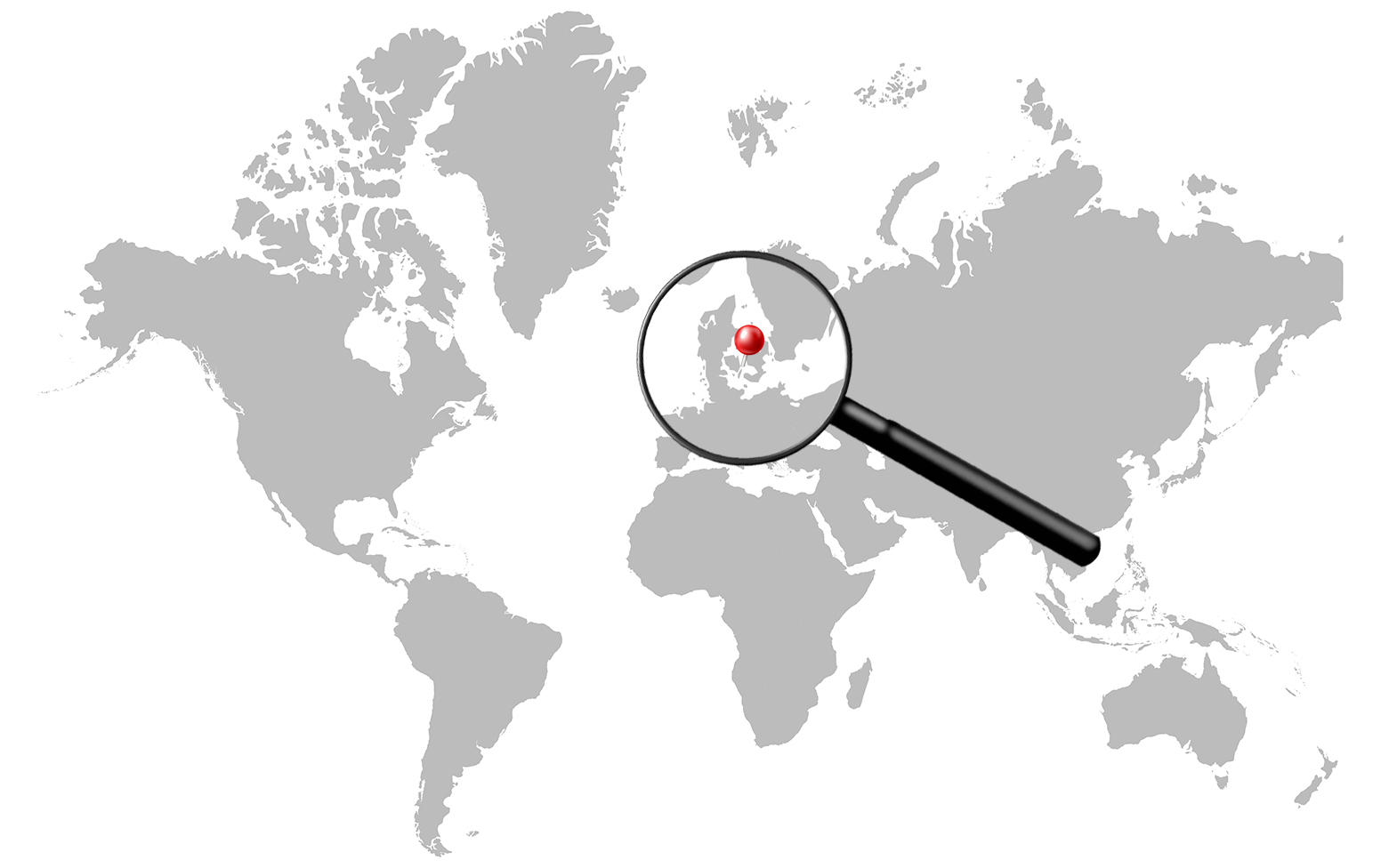
Denmark is a small, peaceful country of about six million people. It has no oil of its own worth speaking of and no quarrel with its neighbors. Yet every single day, roughly 192 ships pass through the narrow waters flanking its coastline, carrying Russian crude oil worth tens of millions of dollars. And here is the part that surprises almost everyone: under a 167-year-old treaty, Denmark cannot legally stop a single one of them.
Three Passages, One Corridor
The Baltic Sea is not an ocean. It is more like a very large lake, semi-enclosed, shallow, with only one way in and out. That exit is a set of three passages threading between Denmark and Sweden, collectively called the Danish Straits.
The largest is the Great Belt (Storebælt in Danish): 60 kilometres long, between 16 and 32 kilometres wide, and the corridor’s workhorse, handling more than 50,000 vessels a year. To its east sits the Sound (Øresund), narrower and more dramatic, 118 kilometres long but pinching to just 4 kilometres at its tightest point. This is where the Øresund Bridge connects Copenhagen to Malmö, Sweden, making it one of the few places on Earth where you can watch an oil tanker pass beneath a commuter train. The third passage, Little Belt (Lillebælt), is the shallowest and least used, mainly by smaller coastal vessels.
Together, the three channels handle around 70,000 vessels per year, roughly 192 a day.
What Flows Through
The volumes passing through are quietly staggering.
About 1.6 million barrels of Russian oil per day transit this corridor. around 40% of all Russia’s seaborne petroleum exports. In dollar terms, Russian oil worth roughly $60 billion per year flows through these waters, pumped from Baltic coast terminals like Primorsk and Ust-Luga and shipped onward to China, India, and Turkey.
Oil gets most of the attention, but the Danish Straits are also a major artery for global trade more broadly. Consumer goods, machinery, chemicals, and agricultural products all depend on clear passage through these three channels. Disruption here does not only hit energy markets, it ripples through the broader European economy.
The Shadow Fleet
Since Western sanctions reshaped the Russian oil trade after 2022, something remarkable has happened to the tankers carrying that oil. Major Western shipping companies, insurers, and banks pulled out. The answer became known as the shadow fleet.
Shadow fleet tankers are simply old vessels operating outside the mainstream shipping ecosystem, registered in obscure jurisdictions, owned through shell companies, and insured (if at all) by little-known providers far outside the Lloyd’s of London market. The fleet surged 277% between 2022 and 2024, and today roughly 65–80% of Russian Baltic oil is carried by these vessels.
Around 175 shadow tankers now transit the Danish Straits each month. The average vessel is 17 years old. Their AIS transponders, the devices that broadcast a ship’s position, are frequently switched off or show falsified locations. Their insurance coverage, where it exists, is often a fraction of what a real spill would cost. As Bloomberg’s reporting on the shadow fleet has documented, this is no longer a fringe phenomenon. It is the new structural reality of Baltic shipping.
Denmark’s Legal Bind
So why doesn’t Denmark simply turn these ships away?
The answer lies in a document signed in 1857. The Copenhagen Convention was negotiated when Denmark still charged tolls on ships passing through its waters, a practice that had irritated maritime powers for centuries. The convention abolished those tolls and guaranteed free passage through the Danish Straits to all nations, regardless of flag or cargo.
That guarantee has never been revoked. Under international law, Denmark cannot block passage or charge fees on a blanket basis. It can impose safety and environmental rules, equally applied. But it cannot tell Russian tankers they are not welcome. Any such move would trigger a legal and diplomatic crisis, and risk setting a precedent that other nations could use to close their own straits. Denmark has announced enhanced inspections, but under the Copenhagen Convention framework, the legal tools available remain narrow.
Why a Spill Here Would Be Different
The Baltic is uniquely vulnerable. It is shallow, averaging just 55 metres deep. It is semi-enclosed, meaning water turnover is slow: the Baltic can take 25 to 30 years to fully refresh itself. Its low salinity creates a fragile ecosystem. And critically, oil recovery here is far harder than in the open ocean: realistic spill recovery rates in the Baltic sit at only 10 to 20%. The rest sinks or disperses through the food chain.
A single major tanker spill could cause between €10 and €50 billion in damages, with cleanup taking 5 to 15 years. The December 2024 Black Sea disaster, when two shadow fleet tankers broke apart in a storm, triggering the worst oil spill in that region this century, offered a preview of what that looks like. The Baltic, more enclosed and ecologically sensitive, would likely fare worse.
Why Traders Watch It
For commodity traders, the Danish Straits are a live signal board.
The key metric is the Urals-Brent spread, the price gap between Russian crude and the international Brent benchmark. When shadow fleet transit numbers fall, or when Baltic nations signal enforcement action, the spread typically widens within 48 to 72 hours. The inverse correlation between Danish Straits transit volumes and Urals pricing runs at around 0.71, tight enough that some trading desks now track shadow tanker AIS data as a systematic input. A credible sanctions enforcement signal can move Urals differentials by 8 to 15%.