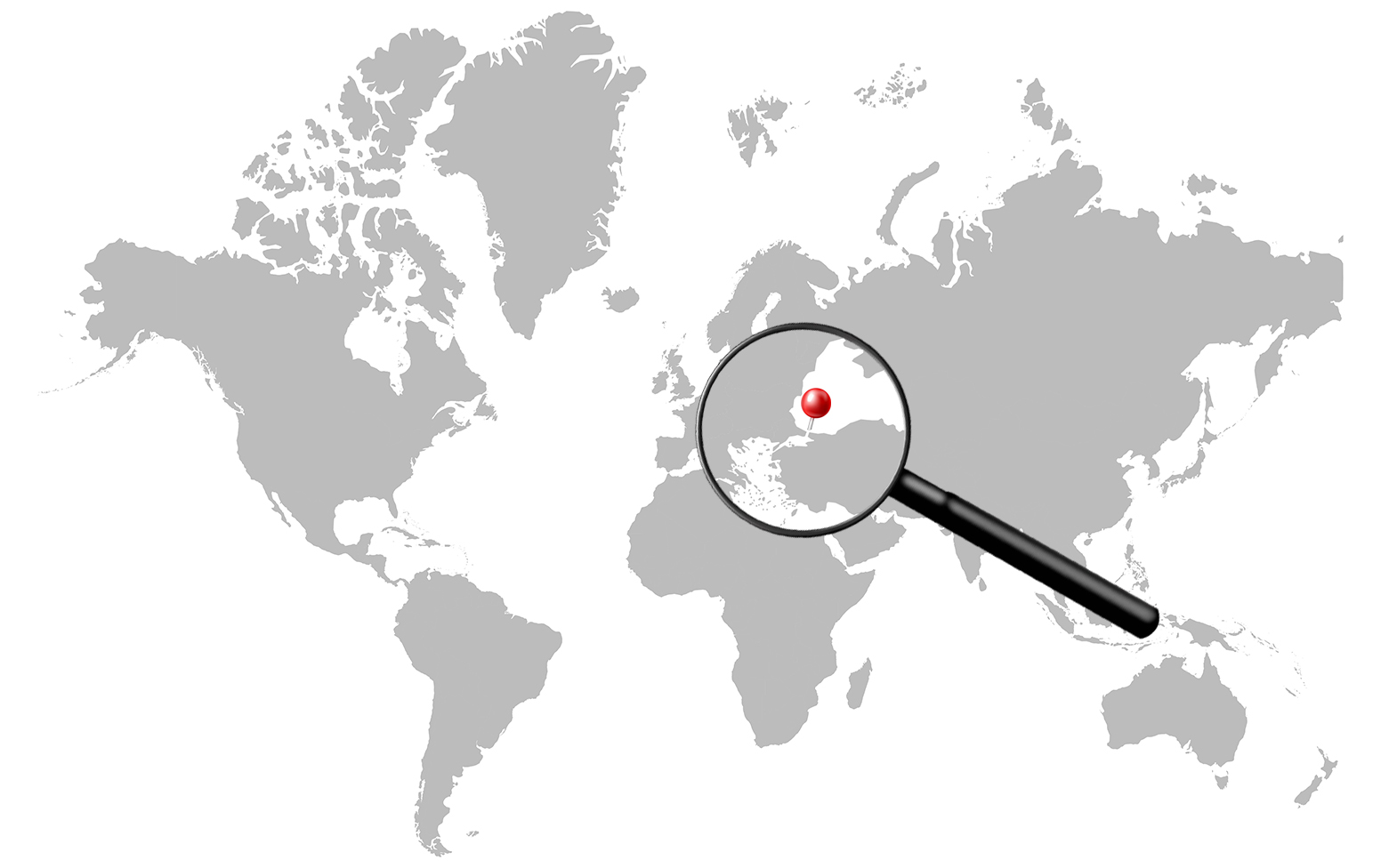
The wheat in your bread may have started its journey on the Ukrainian steppe, been loaded onto a bulk carrier at Odesa, and then squeezed through one of the narrowest waterways on the planet, past apartment blocks, mosques, and waterfront restaurants in the middle of Istanbul. The Turkish Straits are where commodity markets meet ancient geography, and where a strip of water thinner than some city parks decides whether grain moves or stays put, and whether oil reaches Europe or doesn’t.
Three Waters, One System
The Turkish Straits are a three-part system connecting the Black Sea to the Mediterranean. The Bosphorus, 30 kilometres long, just 700 metres wide at its tightest point, threads through the heart of Istanbul. At its southern end, it opens into the Sea of Marmara, an inland sea that sits between the two straits. From Marmara’s western shore, the Dardanelles picks up: 61 kilometres long, it connects the inland sea to the Aegean and from there to the wider world.
The Black Sea has no other exit. It is a closed sea, landlocked except for this single chain of passages. For any country on its shores: Russia, Ukraine, Georgia, Romania, Bulgaria, everything that moves by water must pass through this bottleneck. There is no bypass and no alternative sea route. Overland is the only other option, and overland is expensive, slow, and limited in scale.
A City in the Way
The Bosphorus does not skirt Istanbul. It runs straight through it. Over 15 million people live across both banks, and the waterway marks the line between Europe on one side and Asia on the other. Residential buildings come down almost to the water’s edge. Ferries cross the shipping lanes at right angles. And down the middle of all this, fully laden tankers navigate sharp bends in a fast-moving current.
The current is a hidden hazard: surface water flows southward toward the Aegean while a deeper, saltier current runs in the opposite direction. Fogs arrive without warning. The channel bends force large vessels to slow almost to a crawl.
The dangers are not theoretical. In March 1994, a tanker named Nassia collided with a freighter in the Bosphorus, caught fire, and burned for days. Twenty-nine crew members died, and the strait closed to shipping for six days. For a waterway that handles around 130 ships per day and over 50,000 vessels per year, a six-day closure is a major event.
What Flows Through
The Turkish Straits carry a striking mix of commodities, and their importance comes precisely from that combination.
On the energy side, the straits handle roughly 3 to 4 percent of global crude oil and petroleum trade, around 3 million barrels of crude per day, plus 20 million tonnes of petroleum products per year. Much of this originates in Kazakhstan, flowing through the Caspian Pipeline Consortium to the Russian Black Sea port of Novorossiysk and onto tankers heading south.
On the agricultural side, Ukraine and Russia together account for a large share of global wheat, corn, and sunflower oil exports, virtually all of it departing through Black Sea ports. Sunflower oil, which most people associate with a supermarket shelf rather than a geopolitical map, moves in huge volumes. So does coal. The straits are simultaneously an energy corridor, a food corridor, and a military corridor.
The 1936 Convention That Still Runs the Place
In 1936, representatives of the major powers gathered in the Swiss town of Montreux and signed a treaty that, nearly ninety years later, still governs who can sail through the Turkish Straits and under what conditions.
The Montreux Convention set two distinct rules. For commercial vessels, passage is free in peacetime, Turkey cannot block merchant shipping without legal consequence. For warships, rules are restrictive: non-Black Sea nations can only send vessels of limited size and can only keep them in the Black Sea for 21 days. Larger warship classes, including aircraft carriers, are effectively barred.
Turkey’s leverage became front-page news in February 2022, when Russia launched its full-scale invasion of Ukraine. Turkey invoked the Convention to close the straits to warships of all belligerent nations, blocking Russian naval reinforcements from the Mediterranean and NATO vessels from entering the Black Sea. Turkey used a 1936 treaty to act as gatekeeper to an entire sea, and neither side could easily argue with it.
The Bread Connection
The food security dimension became impossible to ignore after 2022. Ukraine is one of the world’s largest grain exporters, a major source of wheat for the Middle East, North Africa, and sub-Saharan Africa. Its exports move almost entirely through Black Sea ports and then the Turkish Straits.
When the war disrupted shipping, global wheat prices spiked. The disruption fed directly into food inflation in countries that depend on imported grain. A temporary agreement: the Black Sea Grain Initiative, brokered by the United Nations and Turkey, allowed shipments to resume, and grain prices responded both when the deal was announced and when it eventually collapsed.
The lesson: what happens in a 700-metre-wide channel in Istanbul has a direct effect on the cost of bread in Cairo, Nairobi, and Beirut.
Why Traders Watch It
Anyone trading commodities keeps one eye on the Turkish Straits. A sustained closure would strand Kazakh and Russian crude, forcing costly rerouting overland or to northern ports without the capacity to absorb the volume. Grain markets are equally sensitive, any signal of disruption moves wheat and corn futures within hours.
Turkey’s role as sole gatekeeper gives it unusual weight: a NATO member that maintains trade ties with Russia, and the only sovereign over a waterway that no one can route around. That makes Turkish foreign policy a variable commodity traders and policymakers cannot afford to ignore.